6 min read
Double-Shell vs Single-Shell Hull: What Changes on the Water
How a double-shell GRP hull differs from open single-skin laminate and aluminium: stiffness, self-draining deck, lockers, noise, price, repairs. No hype.
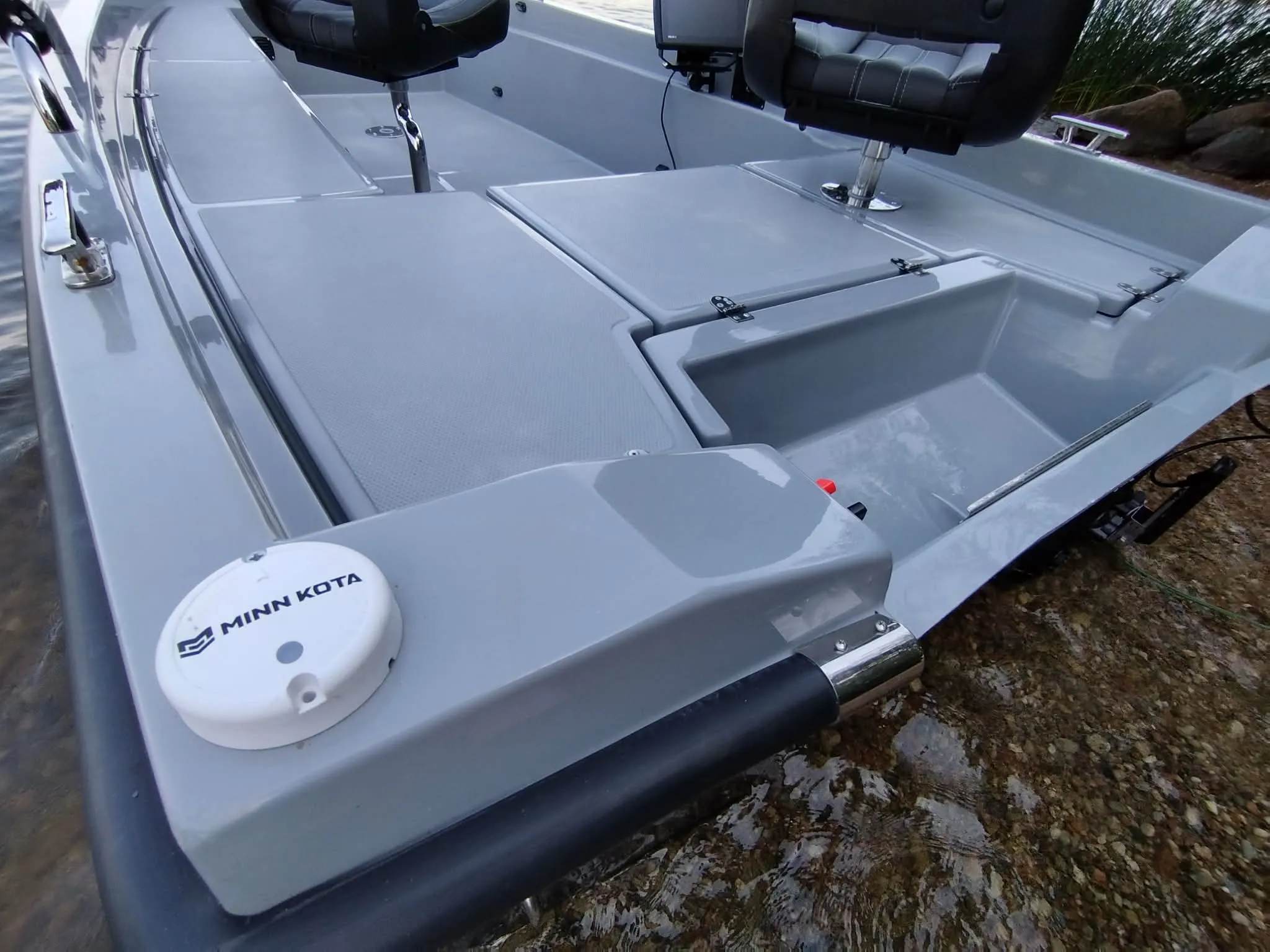
A double-shell boat is a hull made of two GRP mouldings: a lower shell (bottom and sides) and an upper shell (deck with built-in lockers), bonded into one closed body. The void between them provides stiffness and reserve buoyancy, and the deck sits above the waterline, so it drains itself. Hawala Boats builds both models this way because an angler on a lake needs a dry, quiet, stiff platform, not a bathtub with frames.
How a double-shell hull is built
Two moulds, two mouldings, one bond. That is how every Hawala comes together.
- Lower shell = the hull. Glass-polyester laminate with gelcoat on the outside. It gives the bottom its shape, its buoyancy and its planing behaviour. At the transom there are reinforcements for the outboard and transom guards inside and out.
- Upper shell = the deck. A separate moulding: the floor, the gunwale returns, the recesses for all six lockers, the motor well and the seat sockets. The lockers are not bolted on; they are part of the shell.
- The bond. The two shells are glued and laminated around the gunwale (under the rub rail) and at support points on the bottom. The result is a closed section, like a box beam: thin walls, high stiffness.
- The void between the shells. An air or foam chamber that lifts the deck above the waterline and provides reserve buoyancy. Boston Whaler built a brand on the same idea: two shells, foam between them, and a boat that floats even when sawn in half.
A single-shell GRP boat stops at step one: a single skin with frames and stringers laminated inside, and a plywood or GRP floor laid on top. Lockers and seats are added as separate parts.
Six things you will feel on the water from day one
1. A dry, self-draining deck. The floor sits above the waterline, so rain, spray and water from the landing net run out through the deck scuppers, not into the bilge. After a downpour you come back to the jetty and the boat is dry without bailing.
2. Lockers moulded in, not added on. Six lockers, including a 225 cm side locker for assembled rods, are recesses in the upper shell. They do not creak, they do not come unstuck after a season, and the anchor-line locker has its own drain.
3. No loose frames. In an open laminate the frames eventually detach from the skin (you hear it as a knock in a chop). In a double-shell hull the stiffness comes from the closed section, not from individual battens, so there is nothing to come loose.
4. A quieter boat. The chamber between the shells damps wave slap on the bottom and the sound of footsteps. Aluminium transmits every dropped lure box straight into the water; double-shell GRP kills it. For spinning and vertical jigging that is a real difference.
5. Easy cleaning. Smooth gelcoat deck with no pockets around frames and no plywood underfoot. A bucket of water and a brush; the rest leaves through the scuppers.
6. Resistance to jetty knocks. The sides are double, and the transom has guards on both faces. A scratch in the gelcoat stays on the surface instead of reaching the structure. The rub rail around the hull takes care of mooring and trailer contact.
Comparison: double-shell, single-shell, aluminium
| Feature | Double-shell (GRP) | Single-shell (GRP with frames) | Aluminium (riveted/welded) |
|---|---|---|---|
| Weight | Medium; two shells weigh more than one | Lightest among GRP boats | Lightest overall at the same length |
| Stiffness | High, from the closed section | Depends on frames and laminating quality | High, but the plate flexes and drums |
| Noise | Low | Medium | High; every knock is heard in the water |
| Storage | Moulded into the deck, dry | Added on, often open | Sheet-metal boxes, usually undrained |
| Drainage | Self-draining deck | Bilge, bung or pump | Bilge, bung or pump |
| Price | Higher (two moulds, more labour) | Lowest | Medium to high, depending on plate thickness |
| Repairs | Gelcoat and laminate: filler and brush, no welder | As above, with easier access from inside | Dents stay; welding needs a workshop |
| Buoyancy when flooded | Chamber between shells as reserve | Only if foam or chambers were added | Only if foam or chambers were added |
The Hawala 450 is CE certified in design category C/D, meaning it is designed for wind up to force 6 and waves up to 2 m (C) or wind up to force 4 and waves of 0.3 m (D) under Directive 2013/53/EU. On a lake that is a margin, not a minimum.
When a single-shell boat makes sense
Honestly: not everyone needs two shells.
- A budget well below a double-shell hull. The second mould and second moulding add cost. If you fish a pond a few times a season, a simpler boat is enough.
- The lightest possible boat to carry. A single-skin GRP or aluminium boat under 4 m can be lifted onto a roof rack by two people.
- You want to fit out the interior yourself. An open shell is a blank sheet: you glue in the floor and lockers where you want them.
- Rocky rivers and frequent dragging. Aluminium wins here, because a dent is just a dent.
If, on the other hand, you spend whole days afloat with two or three anglers, move between marks, troll on a big lake and want the boat to stay silent after ten seasons, the two shells pay back the price difference in peace of mind and time.
How to look after GRP
GRP does not ask for much, but it asks regularly.
- Wash after the season and after every salty or very murky water. Water with mild detergent and a soft brush. Do not scrape algae off with sharp tools.
- Wax the gelcoat once a year. Gelcoat is a 0.5–0.8 mm layer that resists UV and water, but sun dulls it over time. Wax restores the gloss and makes dirt slower to settle.
- Fix scratches and chips straight away. Exposed laminate absorbs water. Colour-matched gelcoat filler, 400–1200 grit paper, polish. An hour’s work.
- Winter storage. Remove the hull drain bung and set the boat bow slightly up so water does not pool in the motor well. Open the lockers and take the battery out. Cover with a breathable tarpaulin, not plastic sheeting, because water condenses under plastic. Do not leave the boat on a trailer with the bottom loaded at one point: support it on rollers or trestles under the stringers.
- Rub rail and fittings. Once a year tighten the cleats and grab rails and check the sealant around cable glands.
Frequently asked questions
Is a double-shell boat unsinkable? The chamber between the shells gives reserve buoyancy, but we use the word “unsinkable” only after a flotation test to EN ISO 12217-3. For boats under 6 m the standard requires a flooded boat to stay afloat. We answer questions about a specific hull individually when you order.
Doesn’t water collect between the two shells? Not if the bond is tight and the hull drain works. That is why every Hawala has a drain bung at the lowest point: after the season you remove it and check whether anything comes out. If nothing does, the chamber is dry.
Is a double-shell boat heavier than an aluminium one? Yes, at the same length two GRP shells weigh more than sheet metal. On a trailer behind a car that does not matter, and on the water the extra weight means calmer behaviour in a chop and less drift in the wind.
See it for yourself
Everything described here is on the Hawala 450 page: dimensions, six lockers, motor well and scuppers. The full list of standard items and the eight upgrade options is on the equipment page. If you want to compare the construction with another boat you are considering, write to us or visit the workshop. We will show you a cross-section in person.
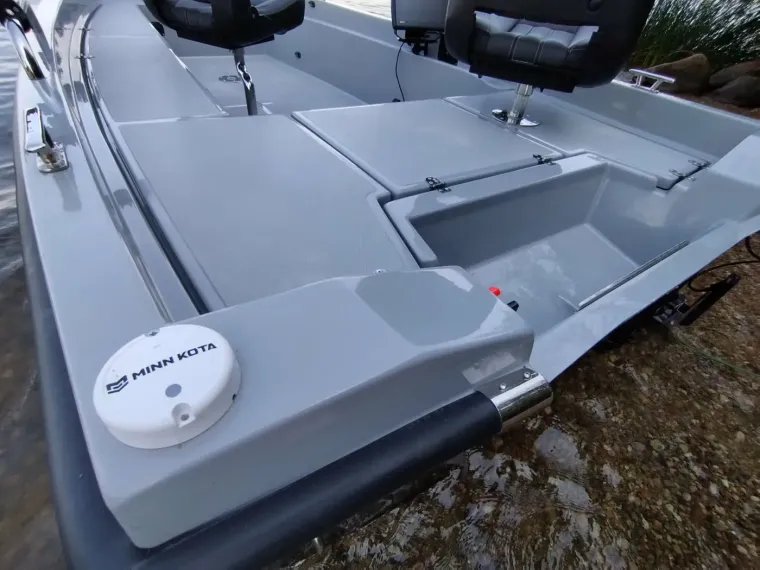
CE certificate on a boat: what design category C/D means
Category C: wind to force 6, waves to 2 m. D: force 4, 0.3 m. What the builder's plate shows, how to check CE on a used boat, what it means for the engine.
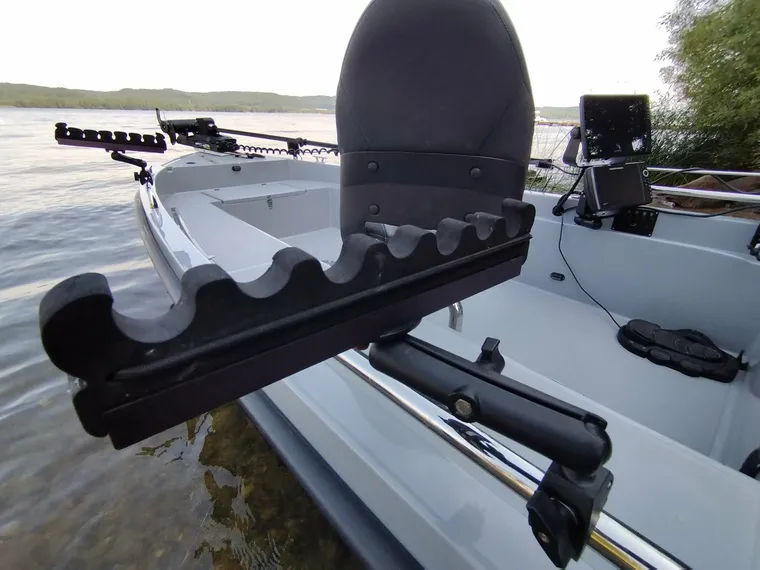
How to Outfit a Fishing Boat: Motor, Sonar, Electrics
Order of investment, thrust and Ah ranges, screen sizes, night-light rules and beginner mistakes. Three builds: starter, sensible, full trolling.